
Gutter Cleaning in Lake Oswego, OR
RESIDENTIAL SERVICES
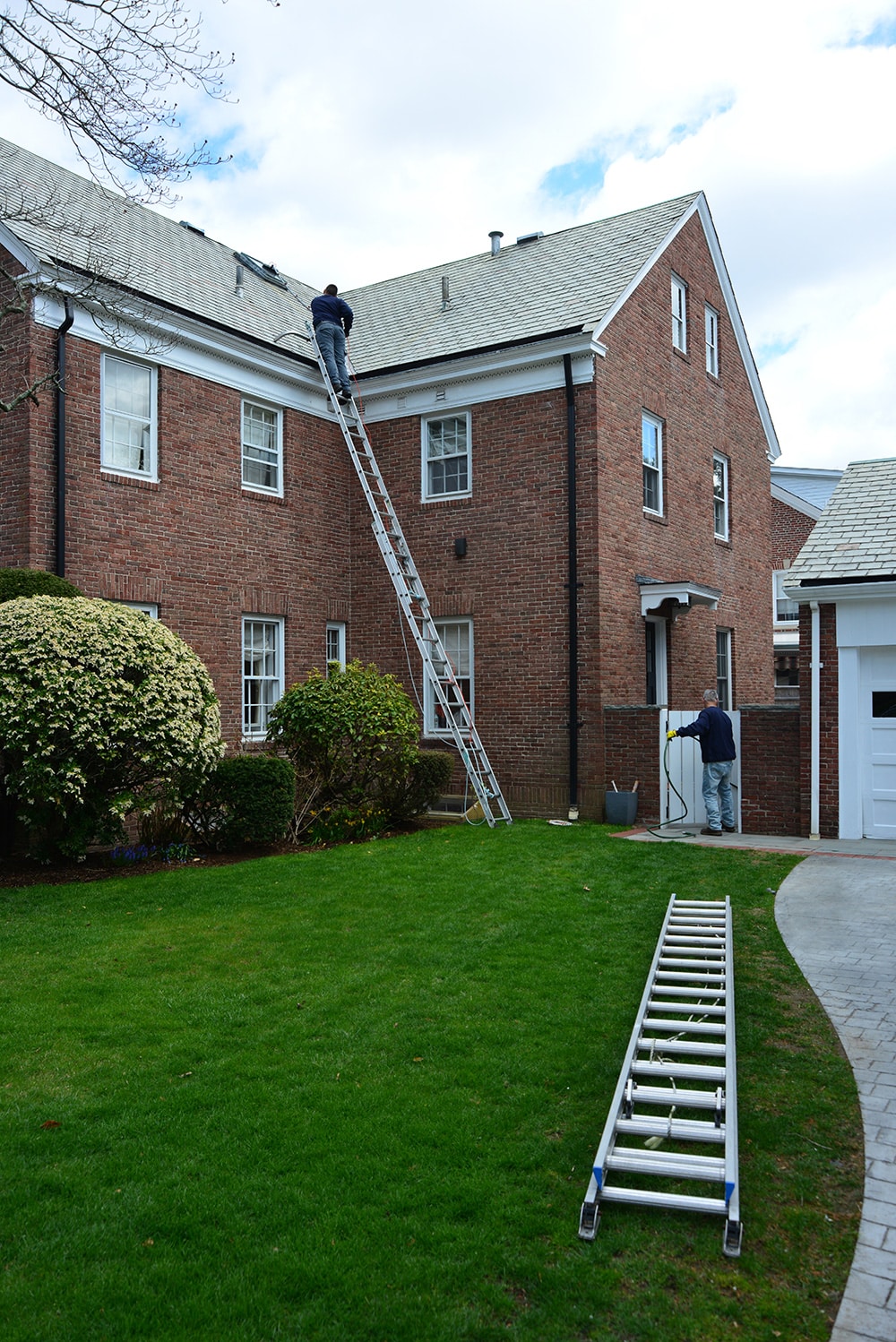
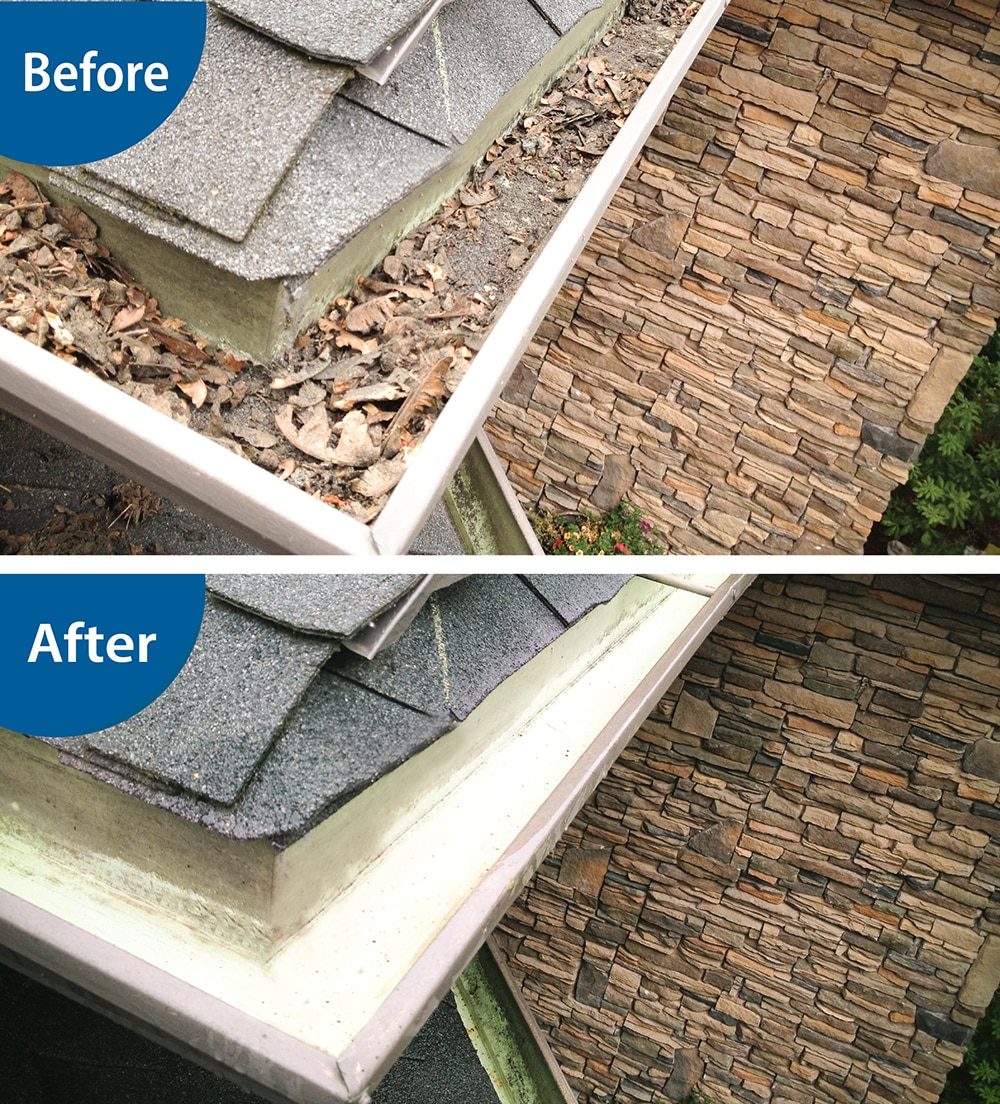
Clearly Amazing cleans gutters throughout Lake Oswego, working from an office on SW 74th Avenue in Tigard, a short drive west. Most gutter advice assumes that a tree causing trouble can simply come down. In Lake Oswego that is a permit application, so the canopy over your roofline is a fixture of the property and the gutters carry the whole load of it. That single fact shapes the schedule here more than anything else about the job.
Call (503) 255-2532 for a free on-site estimate.
The trees are staying, so the gutters do the work
Lake Oswego regulates tree removal under Chapter 55 of its city code. A permit is required to remove any tree measuring 6 inches or more in diameter at breast height. The city issues Type I, Type II, Hazard and Emergency permits, each valid 60 days with a possible 60-day extension, and states the purpose plainly: preserving the city’s wooded character.
Whatever you think of the rule, it settles a practical question. Elsewhere in the metro, the answer to a fir dumping into the gutter over the garage is to have the fir taken out. Here that is a form and an outcome you do not control. The canopy stays, and gutter maintenance is the part you can actually schedule.
What that canopy drops arrives in two waves. Douglas-fir, western red cedar and big-leaf maple are the species the City of Lake Oswego and the Oswego Lake Watershed Council cite repeatedly here — one documented local stand is a 17-acre oak woodland with more than 300 mature oaks over a sub-canopy of ash, Douglas-fir and big-leaf maple.
The conifers go first. Western red cedar sheds its flat, scale-like foliage in what arborists call flagging, generally late summer into early fall and heavier after a dry summer. Douglas-fir sheds needles year-round with a heavier push over the same window, and drops cones on top of them. Then the big-leaf maple turns, through October and November. It is named for the leaf, and that leaf is the problem: a few lie flat across an outlet and seal it in a way needles never quite manage on their own.
The rain here is winter-concentrated. December is the wettest month of the year and July the driest, so the sequence is a gutter that loads up in late summer, sits through a dry stretch that hides the evidence, and then meets the heaviest rain of the year already full.
Get a free estimate in Lake Oswego
Where the water goes once it leaves your roof
The city splits its watershed into three subbasins. The Oswego Lake subbasin sits in the middle. The Tryon Creek subbasin drains the northeast quadrant — Tryon Creek is a 7-mile creek rising in Portland’s West Hills and running through Tryon Creek State Natural Area to the Willamette, with roughly 900 of its 4,200-acre watershed inside Lake Oswego. The western part of the city drains to the Willamette River, and Springbrook Creek is another named creek in the same system.
None of that is abstract, because Lake Oswego is not flat — the Mountain Park neighborhood sits on top of Mount Sylvania, and hilly ground is the norm here. An overflowing gutter does not pool politely at the foundation the way it does on a valley-floor lot. It picks a line downhill and runs it, taking soil and bark mulch along, and arrives somewhere: a lower wall, a patio, a neighbor’s planting, a storm inlet.
So we care as much about where a downspout ends as whether the trough above it is clear. A spotless gutter feeding a downspout that empties a foot from a downhill foundation wall is a half-finished job, and on sloping ground the missing half is the expensive one.
What the job involves
Free on-site estimate in Lake Oswego
Areas we cover in Lake Oswego
We work across the city, including First Addition and Old Town, Lake Grove, Mountain Park, Palisades, Waluga, Westlake, Uplands, Glenmorrie, Hallinan Heights, Bryant, Birdshill and Oak Creek.
Lake Grove is worth a note. It sits west of Oswego Lake and includes some of the town’s older developments, which means planting that has had decades to grow over the roofline. Gutters on those lots need more attention than the size of the house would suggest.
When to schedule
Late September into October is the strongest window for most Lake Oswego homes. The cedar flagging and the fir drop are done, and you get the system clear before the rain builds toward the December peak.
A second visit in late November or early December catches the big-leaf maple, which finishes weeks after the conifers. Book it if any of these apply:
- Mature big-leaf maple within reach of the roof. The leaves are large enough to block an outlet on their own, and they come down after a September clean.
- A sloped lot with a lower level or a downhill wall. The consequences of an overflow are worse, and worth not finding out about.
- Heavy conifer cover overhead. A single mature Douglas-fir can refill a run by itself.
Any month works if that is when it suits you. People call in January because a storm made the problem visible, in spring because the garden is being tidied anyway, or in July because the ladder work is pleasant for once. A gutter cleared in February spends the rest of the wet season doing its job.
Questions Lake Oswego customers ask
How often do gutters need doing here?
Once a year covers a lot of homes if the timing is right, which means fall rather than spring. Twice for a lot carrying both conifers and big-leaf maple, because the two drops are two months apart.
Can you just cut back the tree that keeps filling them?
We are a cleaning company, not a tree service, so no. And worth knowing before you ask anyone: in Lake Oswego, taking out a tree of 6 inches diameter at breast height or larger needs a city permit. If a limb genuinely has to come off, start with the city’s tree page and a certified arborist.
Can I do this myself?
On a single-story house on level ground, with someone footing the ladder, it is a reasonable Saturday. Two cautions. Wet needle mats do not respond to a blower, so the compacted layer causing the blockage stays put. And the fall risk is real — the U.S. Consumer Product Safety Commission estimates more than 164,000 emergency-room-treated ladder injuries a year. On a hillside lot where the downhill side is a full story taller than the uphill side, we would not.
Do you handle the underground drain lines?
Downspouts are included and we flush every one. Buried lines running out to the street or a drywell are a separate trade. If a flush backs up, we will tell you what we saw so you can get the line scoped rather than guessed at.
Will you tell me if I do not need the work?
Yes. If the system is clean when we get there, we say so.
Clearly Amazing — Portland / Tigard
15717 SW 74th Avenue, Suite 400, Tigard, OR 97224