
Roof Cleaning in Lake Oswego, OR
RESIDENTIAL SERVICES
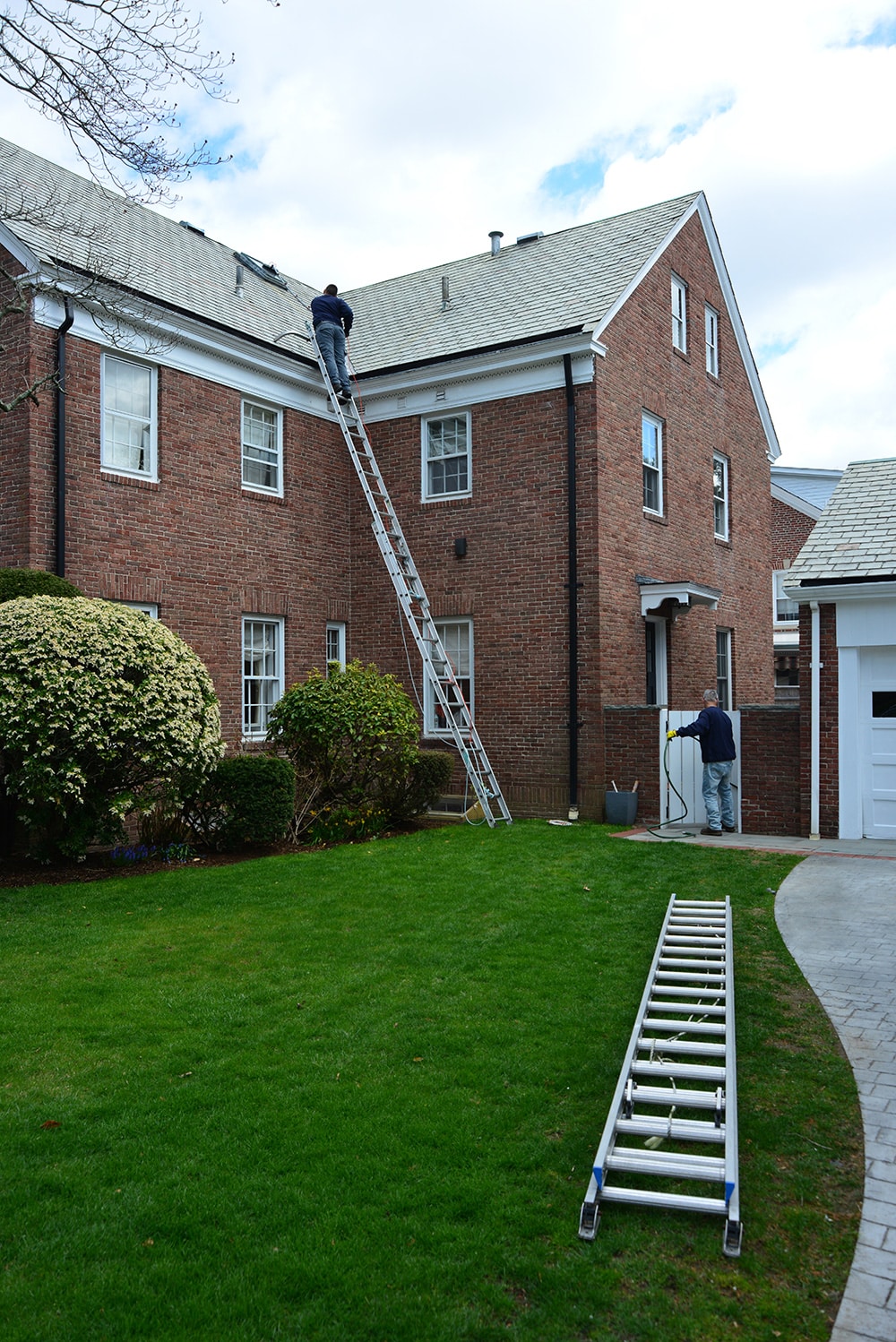
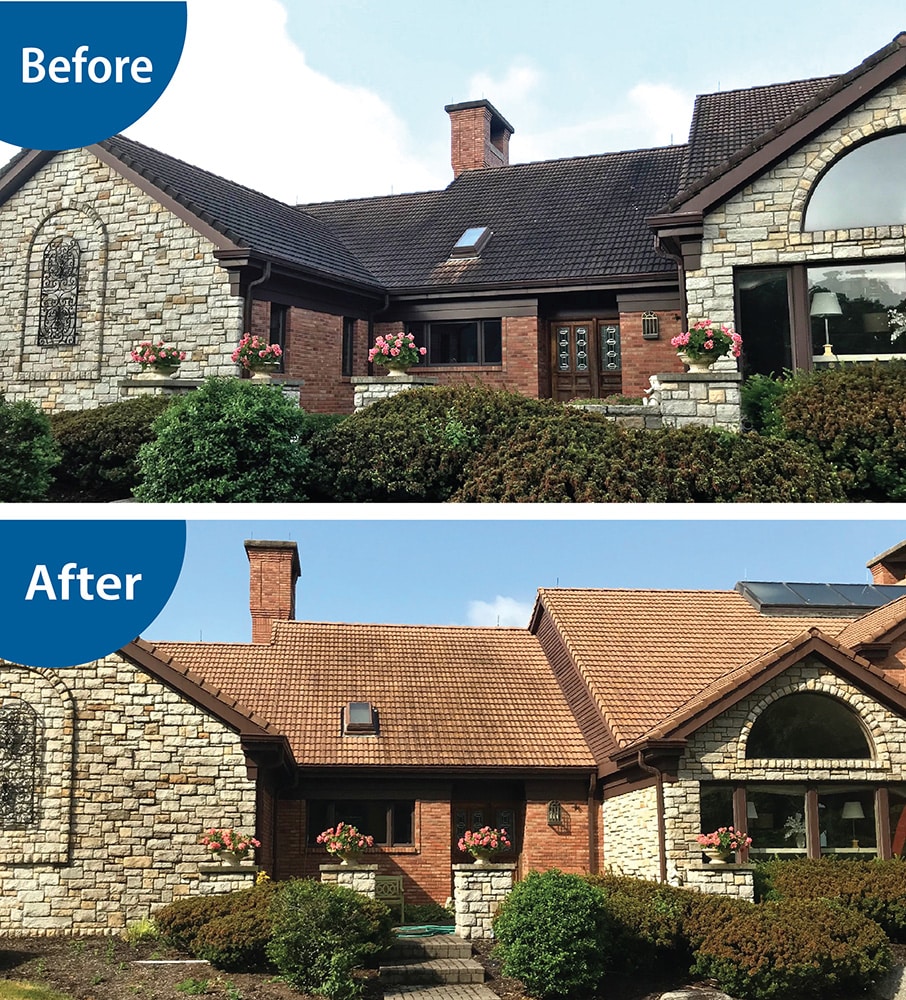
Clearly Amazing soft washes roofs across Lake Oswego from an office on SW 74th Avenue in Tigard. We do not pressure wash asphalt shingle, and a good deal of what we treat here sits under trees the house was deliberately built around. That is not an accident of landscaping. It is a design tradition in this city, and it produces exactly the shade and moisture that moss wants.
Call (503) 255-2532 for a free on-site estimate.
These houses were designed to keep their trees
Lake Oswego has a recognized concentration of Northwest Regional Modernism — mid-century homes built through the 1950s and 1960s, clustered particularly in Lake Grove, Forest Hills and Hallinan Heights. John Yeon, a pioneer of the Northwest Regional style, is associated with mid-century work in the area.
The whole point of the style is that the trees stay. Rather than clearing a pad and setting a house on it, these homes were fitted into standing timber, with broad overhangs and shallow roof pitches keeping the building low against the site. Sixty-odd years on the timber is mature, and the roof spends its life in shade under Douglas-fir and western red cedar.
Oregon State University’s Extension Service publishes standing guidance on roof moss, which tells you how routine this is regionally. The mechanism is simple: moss needs sustained moisture, shade, and something organic to root into, and a shaded roof under conifers in a winter-wet climate supplies all three. December is the wettest month here and July the driest, so growth browns off in summer and looks dead from the driveway. It is not. The rhizoids gripping the shingle come through the dry months and green up with the fall rain.
OSU’s plant pathologist Jay Pscheidt puts the long-term fix bluntly: “You’ve got to let the sun in or it will return.” On a house designed around its trees, that is a limited lever. Thinning branches directly over the roof helps and is worth an arborist’s opinion. Clearing the roof is the part straightforwardly in your hands.
Get a free estimate in Lake Oswego
Mountain Park roofs came of age together
Mountain Park is a different situation and a large one. Developed from 1968 by Carl Halvorson on roughly 600 acres atop Mount Sylvania, it holds 2,735 homes and is described by the community itself as one of the largest homeowners associations in the country. Annexing it increased the city’s population by nearly 20 percent at the time.
A planned community built out over a compressed period ages on a shared clock. Roofs went on within a few years of each other, replacement has run in waves since, and growth conditions are broadly the same across the neighborhood because the siting and elevation are the same. If your roof is greening, the odds are good that your street is greening.
Hilltop siting adds one more thing: these roofs are seen. On a slope, the roof plane of the house below is a view from the house above, which is why so many calls we take there start with somebody else noticing. Where an association takes an interest in how roofs look, that is often what prompts the call, and it is a perfectly good reason to book.
What ARMA actually says
The Asphalt Roofing Manufacturers Association is worth quoting accurately, because plenty of contractors do not. ARMA warns never to pressure wash an asphalt roof, and recommends that only trained professionals engage in such activity.
ARMA is equally straightforward about the limits, and so are we: the effect of any roof cleaning is temporary and growth returns. That is not a caveat on the purchase. It is the reason a roof belongs on a maintenance cycle at all, in the same category as the gutters and the furnace filter, rather than on the list of things you deal with once they look bad.
How we work
Free on-site estimate in Lake Oswego
Areas we cover in Lake Oswego
Across the city, including Mountain Park, Lake Grove, Hallinan Heights, Westridge, Uplands, Palisades, Waluga, Evergreen, Forest Highlands, First Addition and Old Town.
The older neighborhoods north of Lakewood Bay are a mixed picture. Housing there runs back before 1900, roof surfaces have been replaced many times over, and what is up there now varies house by house rather than street by street. We take those one at a time.
When to schedule
Late spring through summer is the natural window. The roof is dry enough to work on safely, the growth is still there to be treated, and you head into the fall rain with a clean surface rather than a season’s accumulation.
Most homes here do well on a cycle of every couple of years, more often under heavy conifer shade. That cycle keeps growth from ever getting properly established, which is a far easier job than clearing years of it.
Other times of year work too, and people book them for good reasons: a house going on the market, a letter from an association, family arriving, or wanting it dealt with before the holidays. We work whenever the roof is dry and safe to be on. If you can see green from the sidewalk it has had a while to take hold, and getting on top of it is the right instinct whatever the month.
Questions Lake Oswego customers ask
Will this damage my shingles?
Not at the pressure we use. The damage risk comes from high pressure, which strips the granules that protect asphalt shingle. That is why ARMA warns against ever pressure washing an asphalt roof and describes a low-pressure chemical method instead.
Do you walk the roof?
Where it is safe. The shallow pitches on the mid-century houses are more walkable than most, but wet moss is extremely slippery and a mossy low-slope roof is more treacherous than it looks. Where we judge it unsafe we work from ladders and extended reach, and the result is the same.
What if I have shake, tile or metal rather than asphalt?
Say so when you call. Our method is built around asphalt shingle and the approach changes for other materials. Better sorted at the estimate than on the day.
What about zinc strips?
The mechanism is real — metal ions in the runoff inhibit growth below them. ARMA advises against retrofitting strips to an existing roof, though, because fitting them means either exposed nails or breaking the shingle sealant bond, and both are leak paths. Their position is that strips make sense at replacement.
My roof is old. Is cleaning still the right spend?
Sometimes not. Widespread granule loss, curling or missing shingles point to a roofer’s assessment rather than a cleaning, and we will say so at the estimate rather than after the invoice.
Clearly Amazing — Portland / Tigard
15717 SW 74th Avenue, Suite 400, Tigard, OR 97224