
Solar Panel Cleaning in Washougal, WA
RESIDENTIAL SERVICES
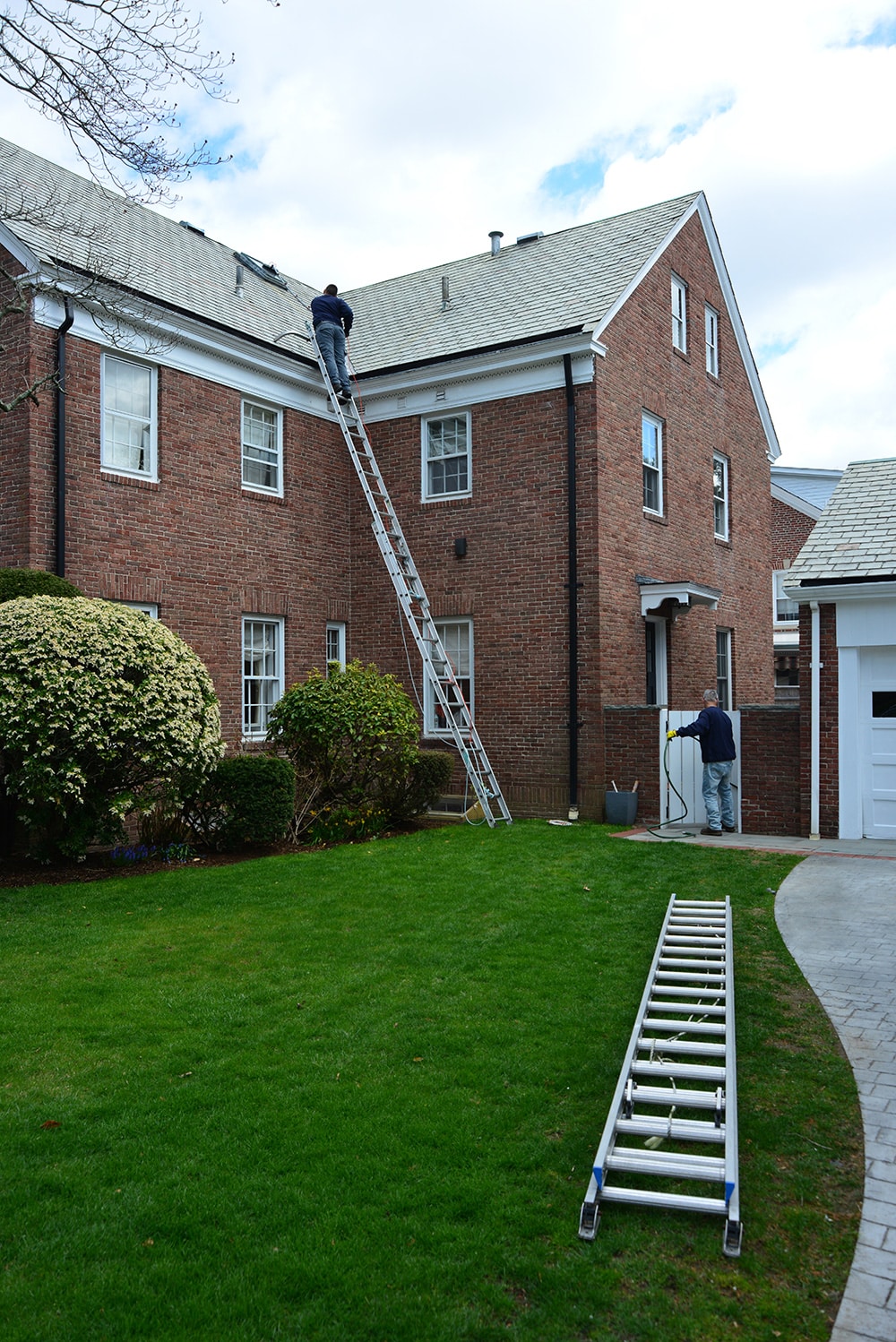

Clearly Amazing cleans rooftop solar arrays in Washougal, working from our Vancouver office on NE 146th Street. Panels here get rinsed constantly through the dark months, then go the sunniest stretch of the year with almost nothing washing them — July and August together see barely more than an inch of rain at the nearest long-run gauge. We wash with deionized water, soft brushes and eco-friendly products, never pressure, we never stand on the panels, and we look at the roof and the mounts underneath while we are up there.
Call (360) 571-2997 for a free on-site estimate.
Your panels get dirtiest in the months they produce most
The rain here is winter-loaded and summer-dry. The nearest long-run gauge, across the Columbia at Troutdale, shows nearly all of the year’s 40-odd inches falling between October and May, with July around half an inch. So the panels are washed continuously through the short, low-angle days of midwinter, and not washed at all through the long days of high summer, which is exactly when they should be producing most. Whatever settles on the glass in June is still there in September unless someone takes it off.
That summer gap is the whole problem. The panels sit under the strongest sun of the year exactly when no rain is rinsing them, so the three months that should produce the most are the three months the glass is quietly losing ground. Rain does the cleaning for you all winter, when there is the least sun to capture, and does nothing for you all summer, when there is the most.
Get a free estimate in Washougal
What collects on panels in Washougal
The bottom edge of every panel acts as a small dam. The aluminum frame stands proud of the glass, so the lowest inch catches whatever runs down it. Through a long wet season that lip stays damp, and damp plus organic debris is how a green line forms along the bottom of an otherwise clean array. Rain never clears it, because the water runs toward that lip.
Summer dust and pollen, with nothing to rinse it away. From July into September no rain is doing the job, so it builds as an even film — no streak, no patch, just a gradual haze that is easy to miss from the ground and quietly costs you output.
Whatever the roof above the array is shedding. Grit off aging shingles and organic matter off a shaded, mossy slope both end up on the panels below and in the channels between the rows.
Newer roofs, older roofs, and the shade in between
Washougal’s median home was built around 1999 and close to half the housing has gone up since 2000, so a lot of the arrays here sit on newer roofs — simple pitches, few obstructions, straightforward to work on. A retrofit array on an older house is a different picture: it works around vents and dormers that were already there, which leaves more edges for debris to sit, and the roof under it is much older than the array. On the hillside neighborhoods toward Mount Norway and through Granite Highlands, shade and slope both come into it — a shaded array stays damp longer after each rain and generally wants cleaning more often, not less.
Clark Public Utilities, the electric utility here, offers net metering for home systems, so a panel that is quietly losing output to a summer film is losing you credit you have already paid to earn back.
What the job involves
Free on-site estimate in Washougal
Areas we cover in Washougal
Rooftop solar across the city and the surrounding area, including the hillside neighborhoods — the Mt. Norway Village area, Lookout Ridge, Granite Highlands, Sunset Ridge and Forest View — the Woodburn Hill subarea, and the newer builds along Washougal River Road. Most of our Washougal solar work is residential rooftop; if you run a business with panels on a low-slope commercial roof, call and we will come and look — access and fall protection decide that one, not the panels.
When to schedule in Washougal
Late June is the ideal window. The wet season has finished, the spring pollen has dropped, and a clean then carries through July, August and September — the three months with the most daylight and the least rain, when the array should be earning its keep.
A second clean in early fall is worth it on a shaded or tree-heavy lot, clearing the summer film before the panels go into their low-production winter. Any time works, though — if it has been a couple of years, the glass will thank you whenever you get to it.
Questions Washougal customers ask
Does dirt really cost me that much?
A gradual summer film is easy to miss and does trim output in exactly the months your panels see the most sun. It is not dramatic; it is a steady few percent you paid to capture and are letting settle on the glass.
Can I just hose them off myself?
A hose spreads the local hard-water minerals and dries to spots, and getting on a wet roof to reach the far rows is where people get hurt. We use deionized water for the spot-free finish and never walk on the panels themselves.
Will you damage the panels or void anything?
Eco-friendly products, no pressure, no standing on the glass — a soft-brush and deionized-water method is what keeps the surface and its coating intact. If we spot a crack or a bad connection, you get a photo, not a repair bill.
How often should they be cleaned?
Once a year suits most Washougal arrays, timed for early summer. A shaded or tree-heavy lot near the Gorge does better on twice.
Clearly Amazing — Vancouver, Washington
1206 NE 146th St, Vancouver, WA