
Solar Panel Cleaning in Happy Valley, OR
RESIDENTIAL SERVICES
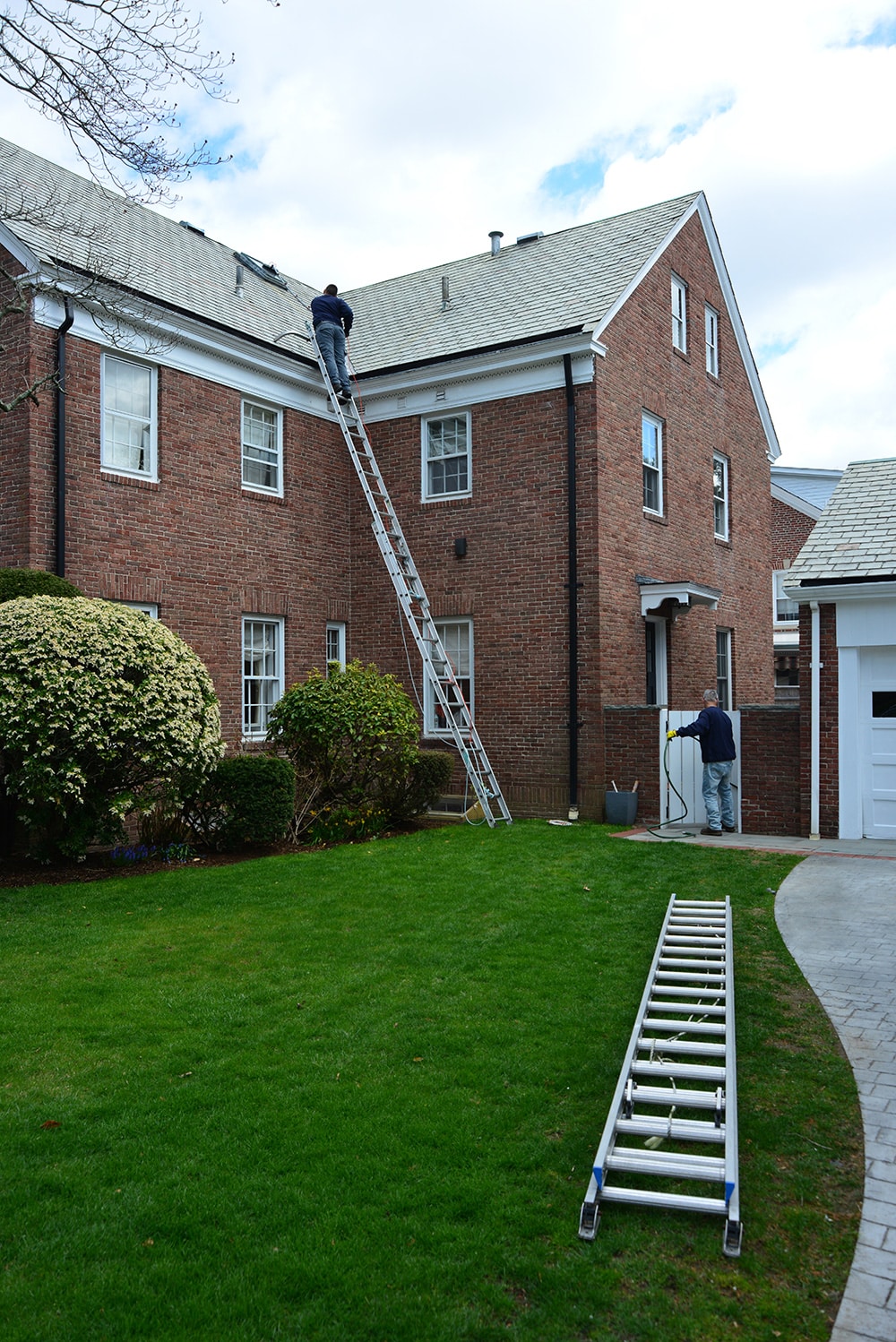

Clearly Amazing cleans rooftop solar arrays in Happy Valley, working from an office on SW 74th Avenue in Tigard. Happy Valley is built across the flanks of Mount Scott and Scouters Mountain rather than on flat ground, so slope and aspect change from one street to the next, and two arrays a quarter mile apart can behave nothing alike. We wash with deionized water, soft brushes and eco-friendly products, never pressure, and we look at the mounts and the roof underneath while we are up there.
Call (503) 255-2532 for a free on-site estimate.
Your roof sits on a hillside, not the valley floor
Happy Valley sits at roughly 643 feet and climbs from there. Mount Scott, the high point, is a cinder cone of the Boring Lava Field, the scatter of small extinct volcanoes under the east side of the metro. Its summit is 1,091 feet, with 740 feet of prominence over the ground around it. The southeastern flank is largely built over, Willamette National Cemetery occupies the northeastern slope, and Scouters Mountain is the second butte inside the city. The Altamont and Jackson Hills areas sit up on those ridges.
The first thing that does to an array is aspect. On flat ground, a street of similar houses gives you a street of similar arrays. On a butte the road bends around the contour and the roof planes bend with it, so a south-facing ridge lot and a north-facing back slope in the same development are different propositions for the same panel. Aspect also decides where growth appears. OSU Extension notes that the dark algae streaking familiar on Northwest roofs typically shows up on north-facing slopes, and that moss wants moisture and shade above all. A shaded north-slope array stays damp longer after every rain, and it is usually the one with a green line along the bottom of the glass.
The second is winter. In Northwest storms the snow level can drop to around 500 or 600 feet, which puts the higher parts of Happy Valley inside it while the valley floor gets rain. No city-specific snow figures exist worth quoting, but the direction is not in doubt: up on the Mount Scott and Scouters Mountain slopes you get snow and freezing rain that Portland proper misses. A panel under snow produces nothing until it sheds, and a steeper array sheds sooner than a shallow one.
Get a free estimate in Happy Valley
Panels get rinsed all winter and almost nothing in August
The rainfall here is lopsided rather than steady. The Portland area averages 36.9 inches a year at the airport under current NOAA normals, and nearly all of it arrives between October and March, with December the wettest month. July and August are the dry end.
So the glass is washed more or less continuously through the short, low-angle days of midwinter, and not washed at all through the long days of high summer. Whatever settles on the array in late June is still sitting there in September unless somebody takes it off. That is the whole argument for cleaning solar in a place this wet, and it is the reverse of what most people expect.
One part of the panel rain never handles, in any month. Water runs down toward the bottom, where the aluminum frame stands a little proud of the glass, and that lower lip catches what the water carries and stays damp underneath. On a shaded lot it is where the green line starts.
What the job involves
Free on-site estimate in Happy Valley
Areas we cover in Happy Valley
We clean solar across Happy Valley and the wider Clackamas County area, including Rock Creek, Altamont, Jackson Hills, the Scouters Mountain area and Mt Scott. Happy Valley runs no official neighborhood-association system of the kind Portland has, so those are the names residents and listings use rather than city designations.
The city went from 4,519 people in 2000 to 23,733 in 2020, almost all of it through new housing developments, so most arrays here sit on roofs built this century. It also means most homes sit inside a private development: the city lists 55 registered communities, made up of 26 homeowners associations, 21 condominium associations, 5 community associations and 3 property owners associations.
When to schedule
Late June is the ideal window. The wet season has finished, spring pollen has come down, and a clean then carries through the three months with the most daylight and the least rain.
Late September or early October is the second useful slot. Going into winter with a clear frame lip and clear channels means five months of rain running off the array rather than sitting along the bottom of it.
Every other month works too, and we clean year round. People book in February because a dip in the monitoring app has them wanting the obvious variable ruled out, in April while access equipment is already on the house, and in November because that is the weekend they are home. A clean array in December goes into spring ready.
Questions Happy Valley customers ask
Does the rain not do this for me?
It does a lot of it. But it does that work in the months when the days are shortest and production is lowest anyway, and almost none of it in July and August. It also never clears the bottom frame lip.
How much output will I get back?
We will not give you a number, and we would be wary of anyone who does before seeing your roof. Soiling depends on the array, the pitch, the shading and what is actually on the glass.
My array is on a steep roof up on the ridge. Can you reach it?
Usually. We work from the roof surface, from ladders, or from poles where the layout allows, and we never stand on a module. Some hillside roofs are pole-only, and if yours is one you hear that at the estimate rather than after.
Should I check with my HOA first?
We cannot read your CC&Rs for you. Given that the city says most residences sit within one of its 55 registered communities, a quick check before booking saves a conversation later, particularly for a condominium or a shared roof.
Can I wash them myself?
On a single-story roof with an easy pitch, plenty of people do. Work early or late while the panels are cool, skip anything abrasive, and be honest about the ground under the ladder. The U.S. Consumer Product Safety Commission estimates more than 164,000 emergency-room-treated ladder injuries a year, and on a sloping lot getting level footing is the hard part.
Clearly Amazing — Portland / Tigard
15717 SW 74th Avenue, Suite 400, Tigard, OR 97224