
Gutter Cleaning in Bethany, OR
RESIDENTIAL SERVICES
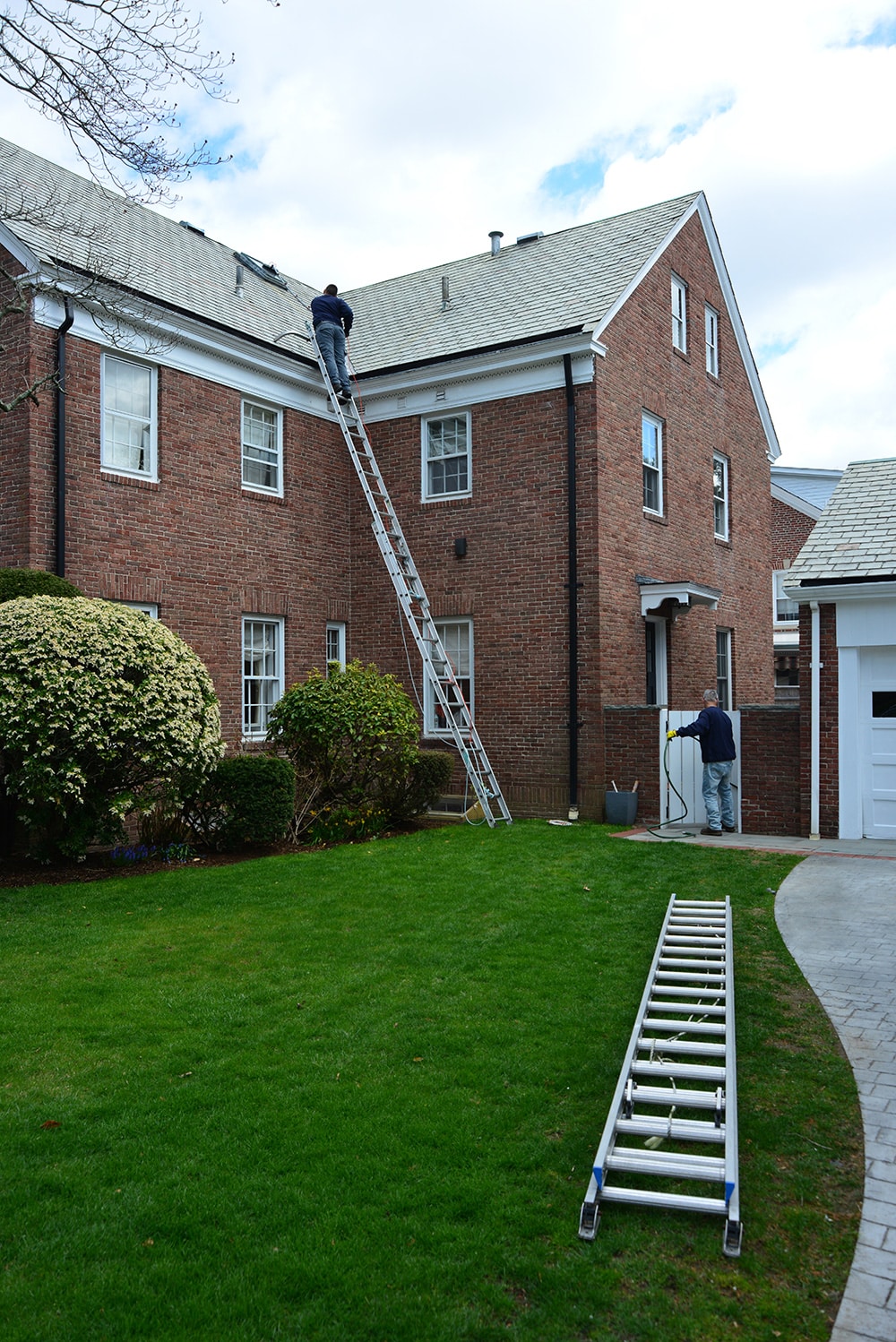
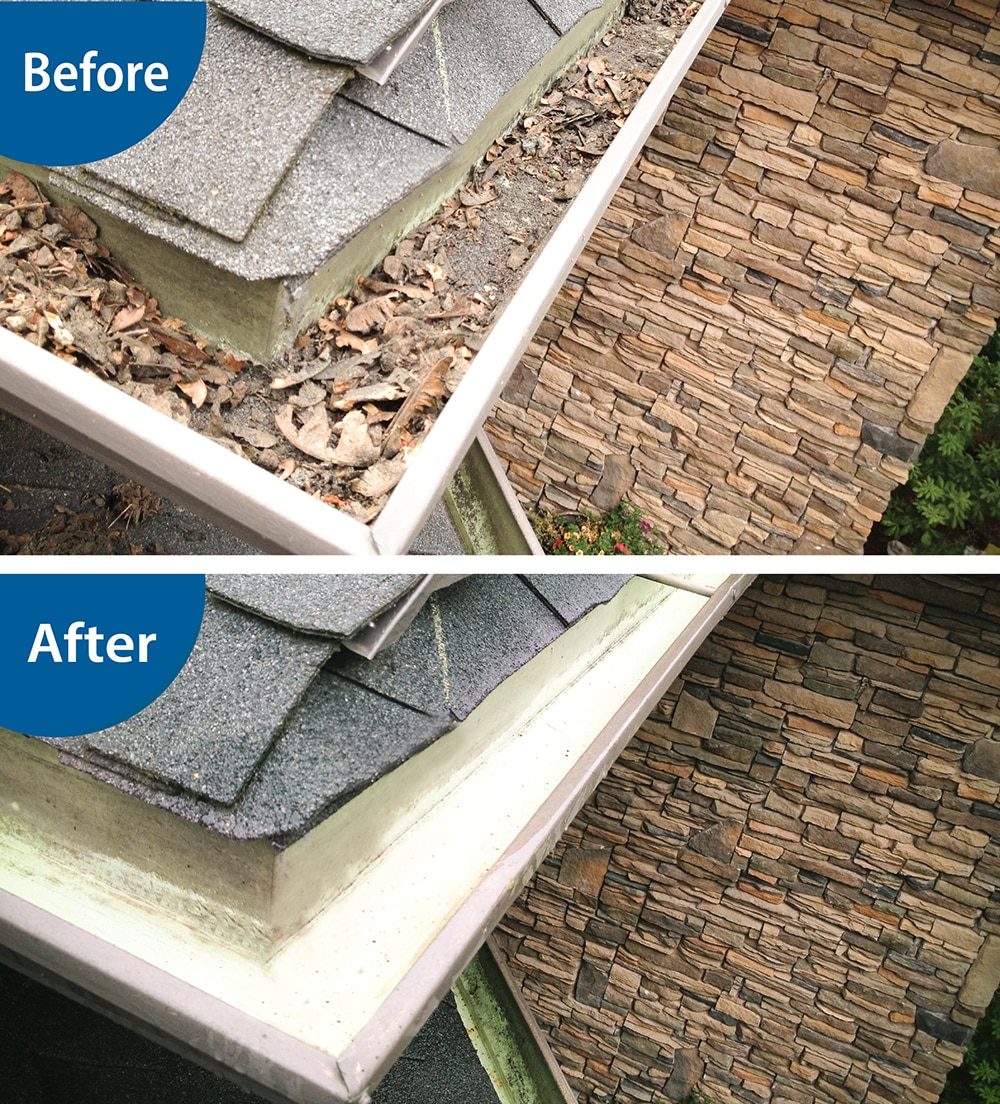
Clearly Amazing cleans gutters throughout Bethany, working from an office on SW 74th Avenue in Tigard. Bethany is an unincorporated community north of US–26 rather than a city, which is worth knowing before you go looking for someone to call about drainage. There is no city hall here. The gutters on your house are entirely your own, and on streets this young they have only recently started needing attention.
Call (503) 255-2532 for a free on-site estimate.
Bethany has no city hall, so the roof is yours to look after
Bethany is a Census-Designated Place in Washington County, not an incorporated city. There is no mayor and no municipal police department. The Washington County Sheriff’s Office patrols, Tualatin Valley Fire & Rescue covers fire and EMS, and Beaverton School District serves most of the area.
For most of daily life that changes very little. For anything to do with water leaving a roof it changes the phone number. A question that in Beaverton or Hillsboro would go to a city department goes to Washington County here, and much of what surrounds a Bethany home — the greenway behind the fence, the planting strip, the pond at the end of the street — sits with the county or an association rather than a city.
The practical upshot is that nobody is coming to look at your downspouts on a schedule. What lands on your roof and comes out of your downspouts is yours from start to finish, and it is worth having someone look at the whole path once a year rather than only the part visible from the driveway.
Get a free estimate in Bethany
Your street was built, planted and grown up all at once
Bethany went from 20,646 residents in 2010 to 31,350 in 2020 — roughly half again as many people in a single decade, and it followed a plan rather than happening piecemeal. North Bethany’s 800 acres came into Metro’s urban growth boundary in 2002, and Washington County’s North Bethany Subarea Plan, developed between 2006 and 2010, laid out a mixed-use main street, higher-density housing near transit, and parks and open space through it.
Planned buildout has a consequence people feel at the gutter fifteen or twenty years later. When a whole neighborhood goes in at once, it gets landscaped at once — front yards, common areas and greenway plantings in the same couple of seasons. Those trees then cross the roofline at roughly the same time, up and down the street. Everybody’s gutters stayed empty for years, and then everybody’s stopped being empty together. Regionally the mix is the Tualatin Valley’s usual one — Douglas fir, bigleaf maple, red alder — and it behaves two ways: fir needles travel into a downspout and pack an elbow, while a couple of broad maple leaves lying flat close an outlet outright.
Density is the second part of it. Where the plan put houses close together, the space between them is narrow, downspouts sit near lot lines, and roof water from one home lands within a few feet of the next. Bethany also sits at 266 feet, higher than the Tualatin Valley floor at about 180 feet, on rising ground toward the Tualatin Mountains rather than out on the flat. Water that gets past a blocked gutter here picks a direction, takes bark mulch and soil with it, and arrives somewhere — a lower wall, a patio, a neighbor’s bed, a shared path.
What the job involves
Free on-site estimate in Bethany
Every visit runs the same three steps.
Areas we cover in Bethany
Because Bethany is unincorporated, there is no official neighborhood-association list the way an incorporated city would have. The named areas people actually use are North Bethany, the formal Washington County subarea north of the older core; Bethany Village, the mixed-use retail hub; and Arbor Oaks. We work all of them, along with the surrounding unincorporated Washington County area toward Oak Hills and Cedar Mill.
The older core and North Bethany are at different stages, and it shows in the work. The earlier streets have planting that is over the roof now. North Bethany’s newer sections have younger trees and more sediment — fine grit and roof granules that pack an elbow rather than filling a trough.
When to schedule
Late October into early November is the strongest window for most Bethany homes. The conifer drop is largely done, the maples are going over, and the system goes into the wettest part of the year empty. That single piece of timing does more good than anything else about the job.
A second visit through the winter is worth booking if any of these apply:
- A mature bigleaf maple over the roof or in the greenway behind it. It drops weeks after the conifers finish, and the leaves are big enough to seal an outlet on their own.
- A lot that falls away on one side. On sloping ground an overflow lands somewhere specific, usually somewhere planted.
- An upper roof plane draining onto a lower one. That section refills long before the rest of the house does.
Any month is a fine month to book. People call in January because a storm made the problem obvious, in spring because the yard is being tidied anyway, and in July because ladder work is pleasant for once. Gutters cleared in February spend the rest of the wet season doing what they were installed to do, and keeping them clear on a regular cycle is ordinary upkeep on the system that keeps water away from everything else.
Questions Bethany customers ask
Our house is only fifteen years old. Why does this suddenly matter?
Because the landscaping caught up with the roofline. A tree planted with the house drops nothing worth mentioning for a decade or more, then clears the eave and starts filling the gutter every fall. It happens to a whole street at about the same time here, which is why several neighbors notice in the same year.
The houses are close together. Is access a problem?
Rarely, but worth checking. What matters is footing — level ground for a ladder and enough width to set it at a safe angle, without leaning over a fence line or a heat pump. We look at that at the estimate rather than discovering it on the day.
Can I do this myself?
On a single-story house on level ground with someone footing the ladder, plenty of people here do. Two honest cautions. A blower skims a wet needle mat instead of lifting it, so the compacted layer causing the blockage stays put. And the fall risk is not theoretical — the U.S. Consumer Product Safety Commission estimates more than 164,000 emergency-room-treated ladder injuries a year.
Will you tell me if I do not need the work?
Yes. If the system is clear when we get there, you get told that, and we would rather have the reputation than the invoice.
Clearly Amazing — Portland / Tigard
15717 SW 74th Avenue, Suite 400, Tigard, OR 97224