
Dryer Vent Cleaning in Northern Virginia

"*" indicates required fields
At Clearly Amazing, we take on all of the mess and risk so you don’t have to.
RESIDENTIAL SERVICES
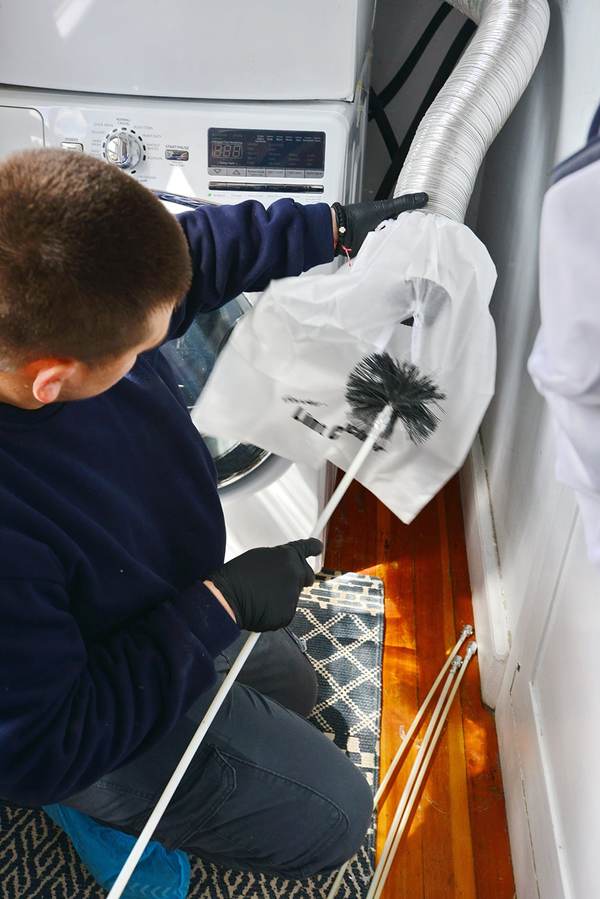

Clearly Amazing cleans dryer vents for homes and businesses across Loudoun and Fairfax counties and the rest of Northern Virginia, out of our office on Trade Center Place in Sterling. Our crews are insured, and every estimate is free and done on site.
Call (703) 723-7770 for a free on-site estimate.
Why a clean dryer vent matters
The National Fire Protection Association puts the yearly average at 13,820 home fires involving a dryer (2014–2018). Failure to clean was the cause of 32% of them, and in 27% the first thing to ignite was dust, fiber or lint.
Signs your dryer vent needs cleaning
- Clothes are still damp at the end of a normal cycle, or drying takes longer than it used to (CPSC).
- Towels and jeans take a long time to dry, or clothes feel hotter than usual at the end of the cycle (U.S. Fire Administration).
- The flap on the outside vent doesn’t open while the dryer is running, or you can’t feel exhaust air coming out.
- The duct behind the dryer is crushed, kinked, or made of white plastic or foil. The CPSC recommends rigid or semi-rigid metal duct instead.
Call (703) 723-7770 for a free on-site dryer vent estimate in Northern Virginia, or request an estimate online.
What Fairfax County Fire and Rescue recommends
Fairfax County Fire and Rescue’s dryer safety advice is to clean lint out of the vent pipe “once a year, or more often if you notice that it is taking longer than normal for your clothes to dry,” or to have a dryer lint removal service do it for you. The department also says to make sure the exhaust pipe isn’t restricted and that the outdoor flap opens when the dryer runs.
Virginia’s dryer duct rules
The 2021 Virginia Residential Code is stricter than the national model: dryer ducts must be supported every 4 feet, and no screw may stick into the inside of the duct, where it would catch lint. Booster fans aren’t allowed in dryer exhaust systems, and the 4-inch metal duct is limited to 35 feet, minus an allowance for each elbow.