
Gutter Cleaning in Hillsboro, OR
RESIDENTIAL SERVICES
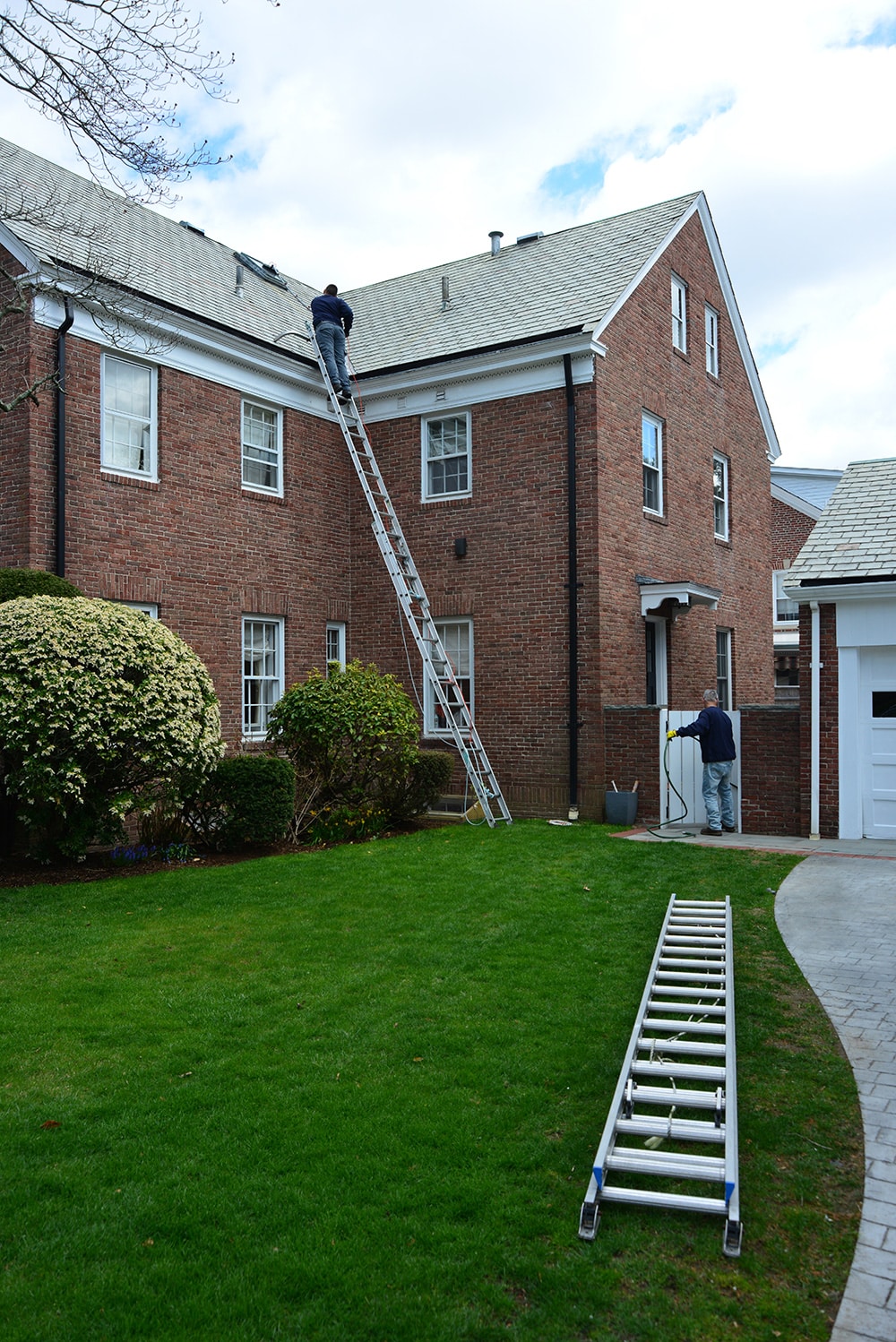
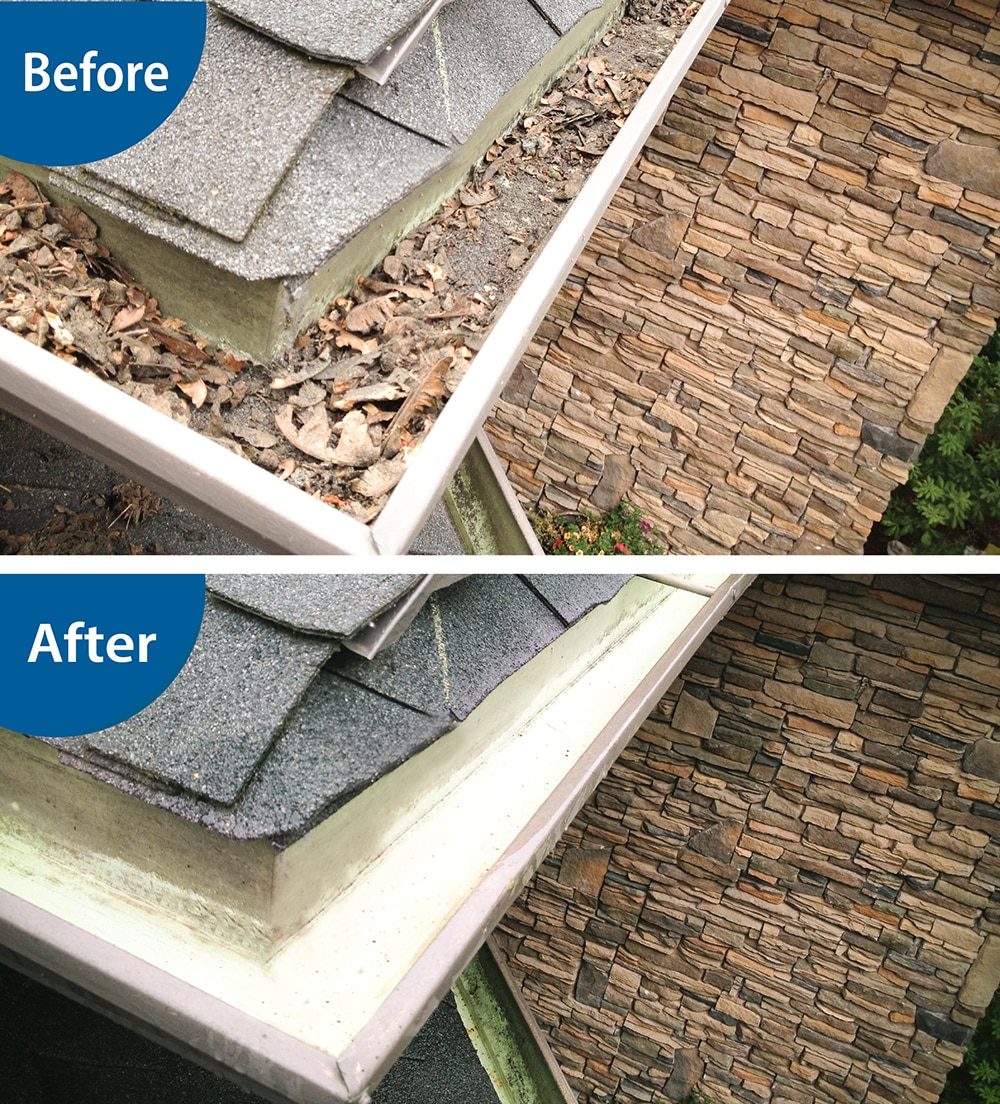
Clearly Amazing cleans gutters throughout Hillsboro, working from an office on SW 74th Avenue in Tigard. The most common thing we hear here is that the gutters never used to need doing. That is usually true, and it is not imagination: on a street built during Hillsboro’s big growth decades, the trees that came with the houses have only recently grown tall enough to drop anything into a gutter.
Call (503) 255-2532 for a free on-site estimate.
The trees your street was planted with have reached the roof
Hillsboro’s growth is easy to date. The city had about 5,100 people in 1950. It passed 37,000 in 1990, reached 91,611 in 2010 and 106,447 in 2020, with a 2025 estimate of 111,126. Most of that arrived in living memory, and it arrived as whole streets at a time.
Whole streets get planted at once, too. A yard tree put in with a new house is not a gutter problem for its first decade or more — it sits below the roofline and everything it drops lands on the lawn. Then it clears the eave. Same house, same gutters, same owner, and suddenly there is material in the trough every fall.
What it drops depends on what went in the ground. Regionally, the Tualatin Valley’s common trees are Douglas fir, bigleaf maple and red alder. The conifers shed needles year-round with a heavier push in fall, and needles are what matter most for downspouts — small enough to travel, stiff enough to knit into a mat inside an elbow where nobody can see it. Bigleaf maple is the opposite problem: the leaf is broad enough that two or three lying flat will seal an outlet, and it comes down weeks after the conifers finish.
So the honest read on a Hillsboro house from the 1990s or 2000s is that it probably did not need annual gutter work for its first fifteen years and probably does now. Nothing has gone wrong. The landscaping grew up.
Get a free estimate in Hillsboro
The newest streets have the opposite problem
On the south and southwest edge of the city, in South Hillsboro and around Witch Hazel Village, the ground was farmland until recently and the planting is still young. There is no canopy over those roofs yet, and there will not be for years.
Those gutters still fill, just with different material. Grit and dust off open ground and active building sites blow across flat terrain easily — Hillsboro sits at 148 feet on notably level land — and settle into the trough alongside the granules that wash off newer roofs in their early years. It is fine, heavy sediment rather than leaf litter, so it does not block a trough dramatically. It packs into downspout elbows instead, which is why a run that looks perfectly clear from a ladder can still back up in a December storm.
Where that water ends up is worth a thought on ground this flat. The Tualatin River forms the city’s southern boundary, and Dairy Creek, McKay Creek and Rock Creek all run through or near town. On level ground an overflow does not run off downhill and disappear; it soaks in where it lands, next to the foundation, through a wet season that runs November to March.
What the job involves
Free on-site estimate in Hillsboro
Every visit runs the same three steps.
Areas we cover in Hillsboro
Hillsboro’s Comprehensive Plan organizes the city into named community and district plan areas rather than neighborhood associations. We work across them, plus the surrounding Washington County area.
- Orenco and Orenco Station — the older Oregon Nursery Company town plus the newer transit-oriented development around it, so mature planting and young planting within a few blocks of each other.
- Downtown — the original core on its historic 400-foot blocks, and the most established street trees in the city.
- Tanasbourne and AmberGlen — mixed residential, retail and office ground on the northeast side.
- Reedville — established housing on the east side of the city.
- South Hillsboro and Witch Hazel — the newest residential ground on the south and southwest edge, where sediment matters more than leaves.
When to schedule
Late October into early November is the strongest window for most Hillsboro homes. The conifer drop has largely finished and the maples are going over, so you get the system clear ahead of the wettest stretch of the year, which runs November through March.
A second visit makes sense in a good number of cases. Book one if any of these apply:
- A mature bigleaf maple within reach of the roof. It finishes dropping well after the conifers do, and the leaves are large enough to close an outlet on their own.
- An upper roof plane draining onto a lower one. That section fills far faster than the open runs.
- Open ground or building work nearby. Sediment collects steadily rather than seasonally, so frequency matters more than timing.
Any month is a good month to have this done, and people book year-round for sensible reasons — a house going on the market, a downspout that overflowed once and made the point, or wanting it off the list. A gutter cleared in March spends the rest of the year doing its job, and clearing them on a regular cycle is straightforward upkeep on the part of the house that keeps water off everything else.
Questions Hillsboro customers ask
Our gutters never needed this before. What changed?
Almost always the trees. Landscaping planted with a subdivision takes fifteen or twenty years to clear the roofline, and once it does, the house starts collecting material it never collected before. Nothing about the gutters has failed.
Our house is brand new and there are no trees. Do we need this?
Less often, but not never. New roofs shed granules for their first few years, and open ground upwind puts a surprising amount of fine sediment into a trough. What we usually find on those houses is a clear-looking gutter and a packed downspout elbow.
Do gutter guards mean I can skip it?
Not usually. Guards keep the big leaves out, which genuinely helps under a maple, but needles and fine sediment still get through, and the debris that collects on top of a guard has to come off somehow. We work on guarded systems regularly and will tell you honestly how yours is performing.
Can I do this myself?
On a single-story house on level ground with someone footing the ladder, plenty of people here reasonably do. Two things to know. A blower skims a wet needle mat rather than lifting it, so the layer causing the blockage stays put. And the fall risk is real — the U.S. Consumer Product Safety Commission estimates more than 164,000 emergency-room-treated ladder injuries a year.
Do you handle the underground drain lines?
Downspouts are included and we flush every one. Buried lines running to the street or a drywell are a separate trade. If a flush backs up we tell you what we saw, so you can have the line scoped rather than guessed at.
Clearly Amazing — Portland / Tigard
15717 SW 74th Avenue, Suite 400, Tigard, OR 97224