
Roof Cleaning in Springfield, VA

"*" indicates required fields
At Clearly Amazing, we handle the roof so you can stay on the ground.
RESIDENTIAL SERVICES
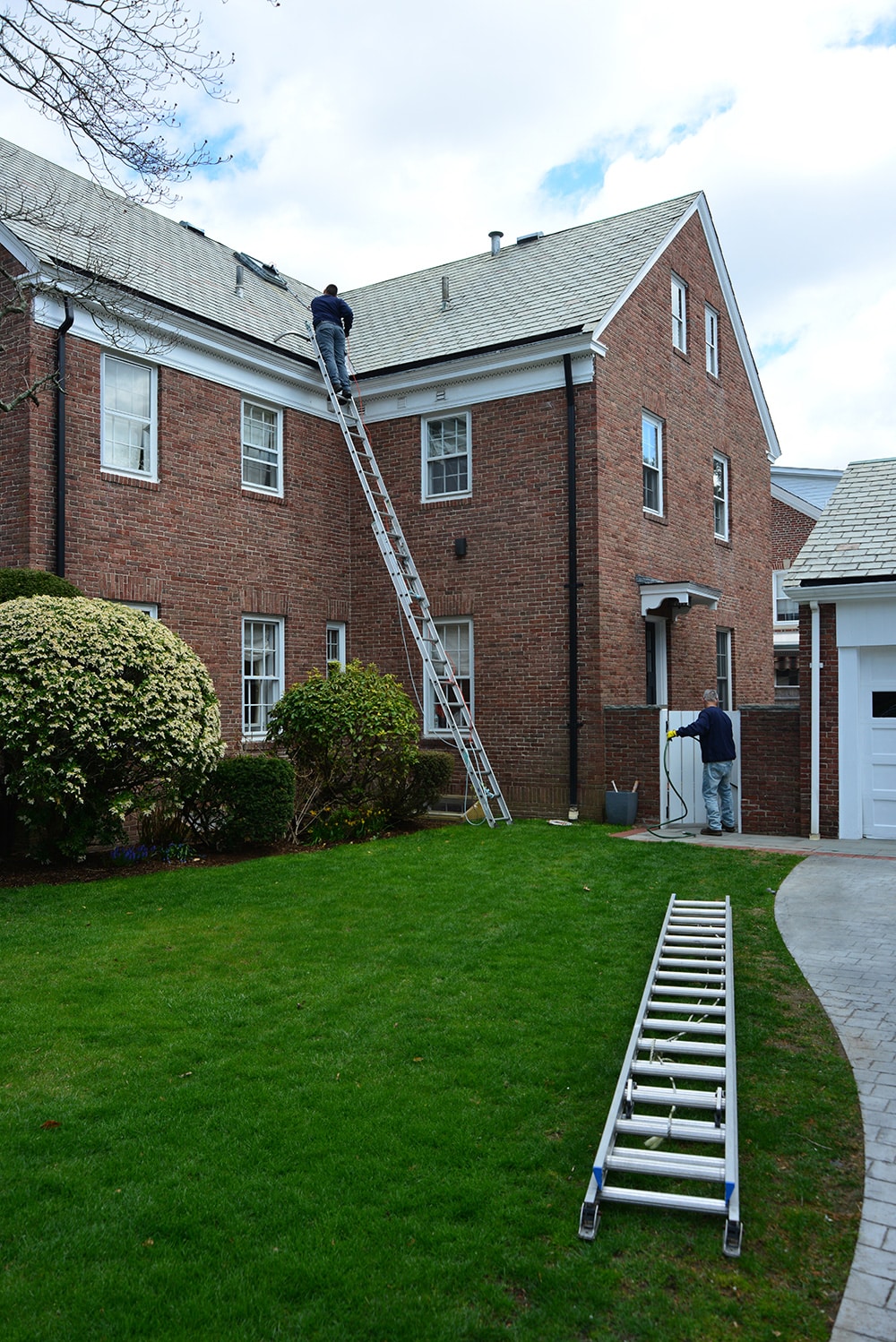
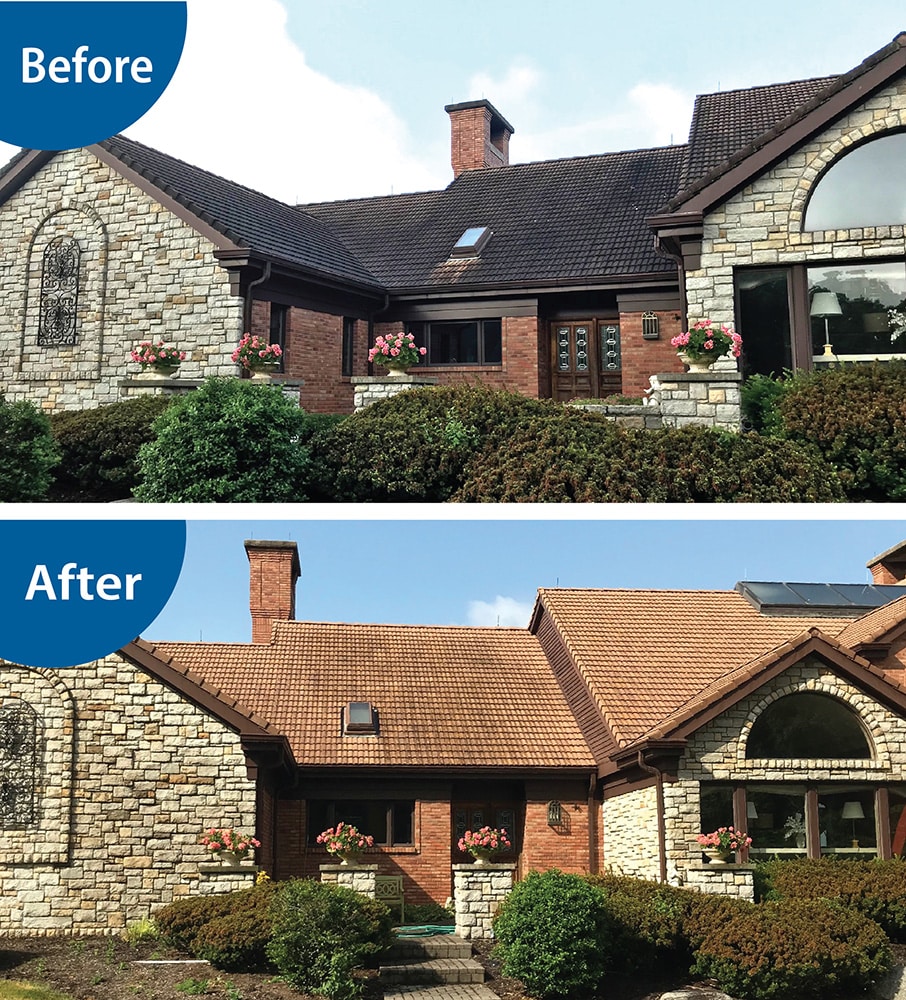
Clearly Amazing soft washes roofs across Springfield, Virginia and the surrounding Fairfax County area, working from our Northern Virginia office on Trade Center Place in Sterling. Low pressure, never a power washer, and we say plainly when what you are looking at belongs to a roofer rather than to us. Springfield sits under heavy Fairfax County tree cover, and shade is the biggest reason dark streaking takes hold on one slope of a roof and not another.
Call (703) 723-7770 for a free on-site estimate.
Which Springfield your house is in
Worth clearing up first, because the name causes real confusion. Springfield is one of the most common place names in the country, with well-known ones in Massachusetts, Illinois, Missouri and Ohio. This is Springfield, Fairfax County, Virginia — unincorporated, with no town council of its own; anything jurisdictional runs through the county.
Locally the name is ambiguous a second time. The Springfield census-designated place is the compact area around the I-95, I-395 and I-495 interchange and the Franconia–Springfield Metro station, and it held 31,339 people at the 2020 Census. What most residents mean is bigger: the four ZIP codes carrying a Springfield address — 22150, 22151, 22152 and 22153 — which together held 108,621, the sense the Greater Springfield Chamber of Commerce uses.
One thing that gets flattened and should not be. West Springfield and North Springfield are separately defined census-designated places with their own boundaries and population counts, and Franconia to the southwest is another. They are neighbors, not sections of Springfield, so we will not list them as Springfield neighborhoods. All of it sits inside the Fairfax County area we cover from Sterling, so the distinction changes nothing about whether we come out. Give us the street address.
Shade is what keeps a Springfield roof damp
Tree canopy covers more than half of Fairfax County, according to the county’s 2017 i-Tree ecosystem analysis, and the same study puts tulip poplar, red maple and American beech at the top by leaf area. There is no canopy survey for Springfield on its own, so the county figure is the honest level of detail available. Your own lot, seen from the driveway, tells you more.
Each of those does something to a roof. Tulip poplar drops big leaves in fall along with cone-like seed pods, and can drip aphid honeydew in early summer. Red maple sends its winged samaras down heavily in April and May. American beech holds its dead leaves well into winter, so its litter arrives late and in stages.
All of that adds up to a roof surface that stays wet longer. The dark vertical streaking on asphalt shingle is Gloeocapsa magma, a cyanobacterium that everyone calls an algae. It does well in the warm, humid Mid-Atlantic, feeds on the limestone filler in asphalt shingles, and establishes first on the slopes that dry slowest — usually north-facing, usually under a canopy. Springfield sits between the two regional NOAA stations, with normal annual precipitation around 41.8 inches at Reagan National and 43.2 inches at Dulles, in USDA hardiness zone 7b — the county picture rather than a Springfield measurement, and we would rather say so than dress it up.
The age of the housing matters mainly because of how long the trees have had. Springfield was farmland until 1946, when Edward Carr began subdividing along the newly opened Shirley Highway, and it grew from around 1,000 people in 1950 to over 10,000 by 1960. On those older streets the planting is now sixty or seventy years mature and sits directly over the roofline.
Call (703) 723-7770 for a free on-site estimate in Springfield, or request one online.
Areas we cover in Springfield
Saratoga, Newington and Newington Forest, Orange Hunt Estates out between Old Keene Mill Road and the Fairfax County Parkway, Ravensworth Farm and Rolling Valley, along with the wider Fairfax County area we serve from Sterling — which takes in West Springfield, North Springfield and Franconia as the separate communities they are.
When to schedule in Springfield
Spring and fall are the ideal windows. Mild air lets the solution dwell properly instead of flashing off. Late May, once the tree pollen season has wound down, is a clean slot; so is late fall, when most of the leaf litter is down and the roof and the gutters can be handled in one visit.
Summer and winter are worth booking too, for reasons that are entirely real: a house going on the market, family arriving, a letter from a community association, or simply having looked at it long enough. In summer we start early and soak more. In winter we take the milder days, because the solution wants the surface above freezing.
Whenever you book it, treat roof cleaning as ongoing care for the house rather than a one-time purchase. ARMA says plainly that no roof cleaning is permanent, and that is the reason to keep it on a regular schedule, the same way you would gutter clearing or HVAC servicing.
Questions Springfield customers ask
My mail says Springfield. Are you actually out here?
Almost certainly. A Springfield address covers four ZIP codes and a lot of ground, and West Springfield, North Springfield and Franconia sit right alongside it as separate communities. All of it is inside the Fairfax County area we work from Sterling. Give us the street address and we will confirm rather than guess.
The back slope is streaked and the front is clean. Why?
Because it is growth, not dirt falling out of the sky evenly. The slope that holds moisture longest is where it establishes first, which in practice means the shaded and north-facing planes. If one elevation sits under mature poplar or maple and the other faces open sky, they will not look the same.
Our community has wooded common ground right behind the house. Does that change anything?
It usually means more shade, more litter and a shorter comfortable interval between cleans — Saratoga alone carries around 39 acres of wooded common-use property. It also means planting close to the house, so tell us at the estimate what is directly under the eaves. Beds get soaked to protect them as standard, and anything delicate gets covered rather than just watered.
Will the streaking come back?
In time, yes, and ARMA says so plainly — the effect is temporary regardless of method or company. That is the reason this sits on a maintenance cycle rather than a to-do list, and a roof kept on that cycle never gets heavily established again.
Could I do this myself?
On a low, walkable roof, careful low-pressure work is achievable, and if that is your plan we would rather you did it well. Before you start, think about the ladder and the runoff. Ladder injuries put more than 164,000 people in U.S. emergency rooms each year by the Consumer Product Safety Commission’s count, and on a planted lot, managing where the runoff goes is most of the work. ARMA’s own position is that this should be left to trained professionals.
Clearly Amazing — Northern Virginia
43676 Trade Center Place, Suite 140, Sterling, VA 20166
(703) 723-7770
Request a free estimate · Roof cleaning across Northern Virginia · What are those black streaks on my roof?
Also in Springfield: window cleaning