
Gutter Cleaning in Tigard, OR
RESIDENTIAL SERVICES
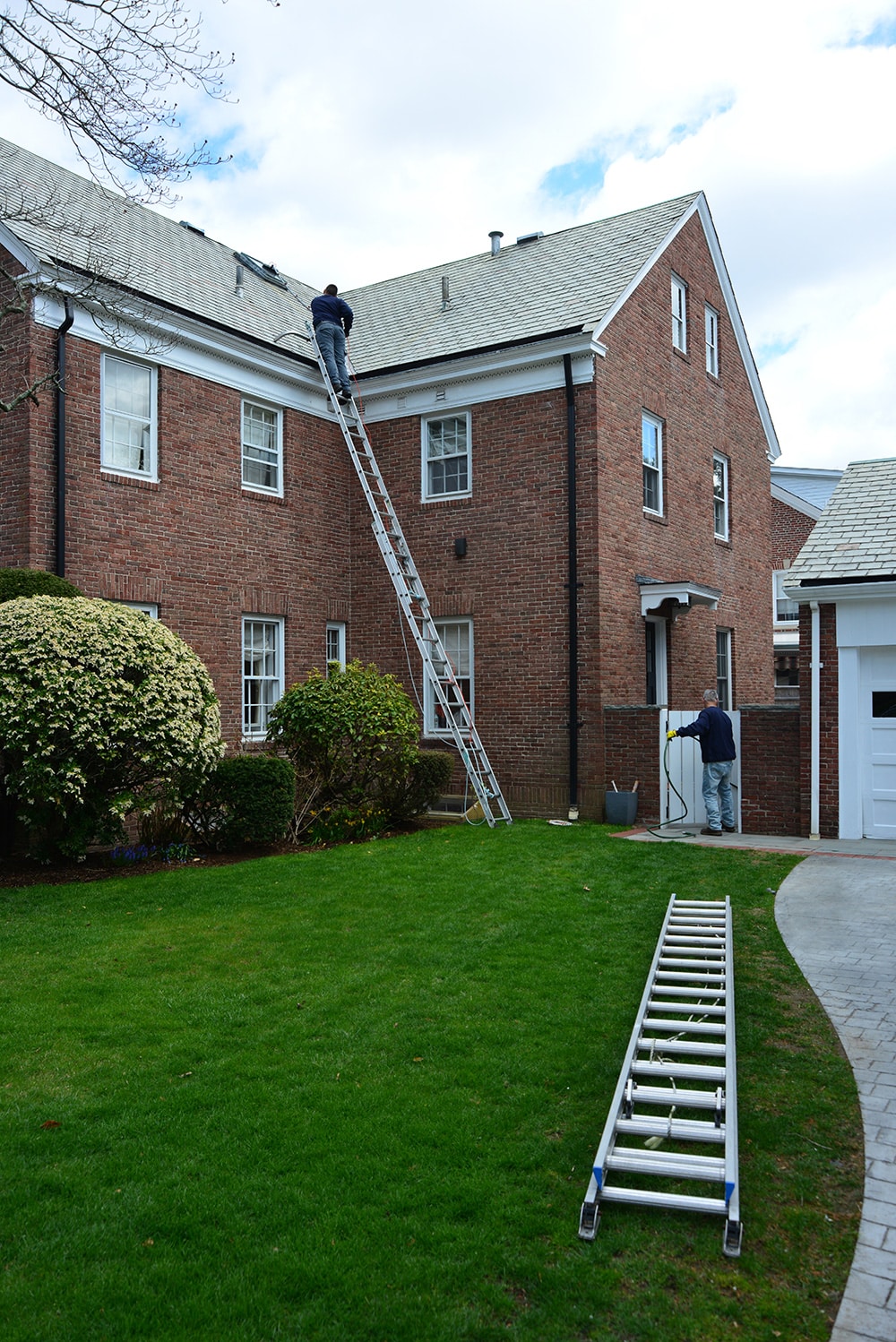
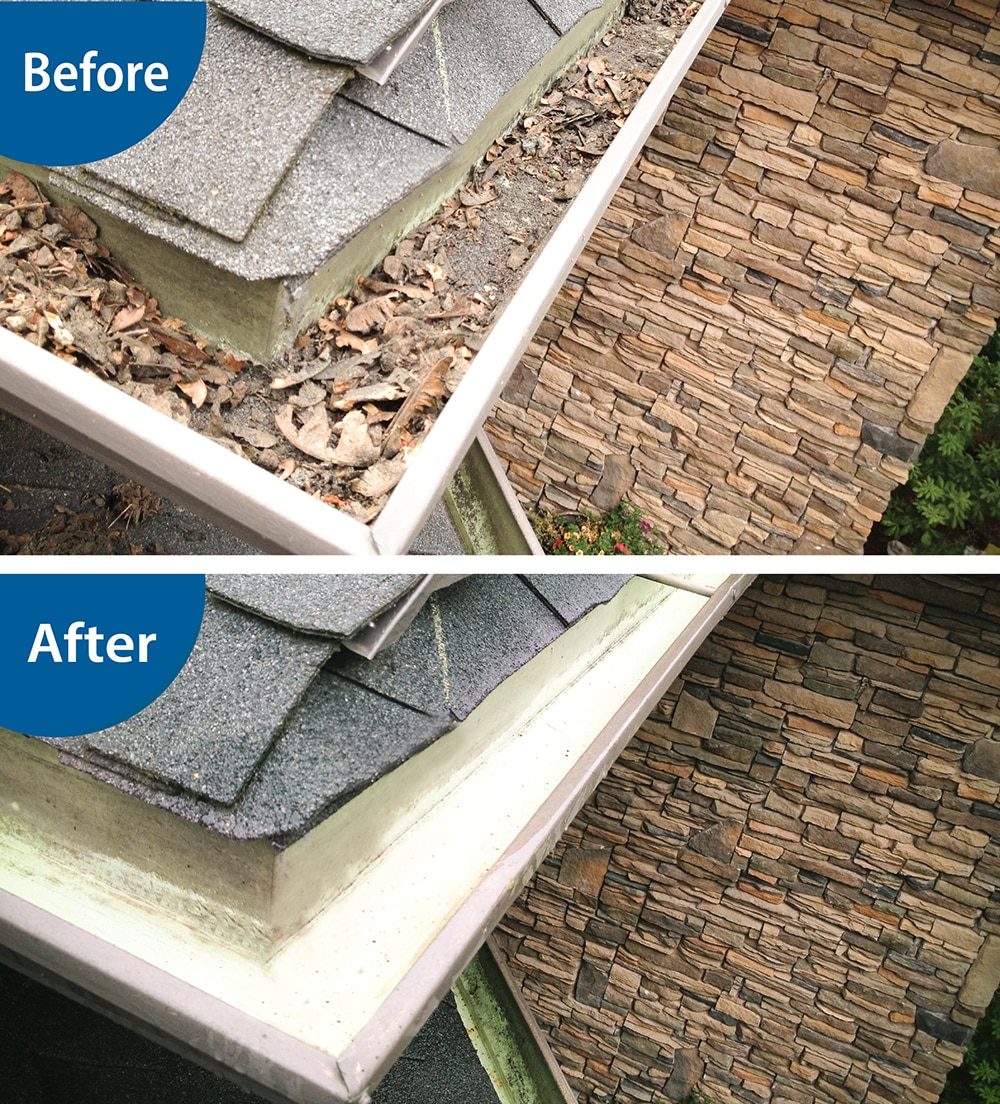
Clearly Amazing cleans gutters across Tigard from an office on SW 74th Avenue, off Durham Road in the south of the city. The crews working Bull Mountain and River Terrace are the same people you reach on the phone.
Call (503) 255-2532 for a free on-site estimate.
Tigard gutters fill up before the rain arrives, not during it
Most gutter-cleaning advice is written for places where deciduous trees drop leaves in October and the rain follows. Tigard works the other way around, and it catches people out.
The dominant conifers here — Douglas-fir and Western red cedar, both confirmed in the city’s own urban forestry program — do their heaviest shedding in late summer. Western red cedar goes through what arborists call flagging: interior needles that have reached the end of a three-to-five-year life turn bronze and drop, usually in late summer or early autumn, and heavier after a dry summer. Douglas-fir drops cones over the same window, with a heavy “mast year” roughly every five to seven years that buries everything underneath.
Then the wet season arrives. October through April brings over 80% of the year’s rain, by NOAA’s 1991–2020 normals for Portland International Airport, and November and December are the wettest months. So the sequence is: gutters load with needles and cones in August and September, sit through a dry stretch that gives no warning, and then take the year’s heaviest rainfall through a system that is already packed.
That is why the useful advice in Tigard is not “twice a year.” It is clear the system in September, after the conifer drop and before the rain.
Get a free estimate in Tigard
Why the hillside neighborhoods have a different problem
Tigard is not a flat city. The average elevation is about 240 feet, but Bull Mountain rises to roughly 715 feet on the western edge, and the slope changes what a blocked gutter does.
On the hillside lots around Bull Mountain, daylight and walkout basements are a common construction pattern — the ground falls away enough that a lower level opens at grade. That is a nice feature until a gutter overflows above it. On a flat lot, an overflowing gutter dumps water at the foundation and you get a damp crawlspace. On a slope with a daylight basement, the same overflow sheets downhill and arrives at a below-grade wall and a door frame.
Homes closer to the valley floor — Metzger, the older streets off Greenburg Road, much of Summerfield — have the more familiar version: water at the foundation, saturated beds, and ice in the downspouts on the handful of freezing nights Tigard gets each winter.
What the job involves
Free on-site estimate in Tigard
Every visit runs the same three steps.
Areas we cover in Tigard
We work the whole city and the surrounding Washington County area, including Bull Mountain, River Terrace, Metzger, Summerfield, the Tigard Triangle, and the neighborhoods around Washington Square. The office is on SW 74th Avenue, so most of Tigard is a short drive rather than a scheduling problem.
River Terrace is worth a note. It is new construction, most of it built in the last decade, and new homes get skipped because the gutters look clean from the ground. The landscaping around them is not new for long, and the surrounding tree cover still drops into them.
When to schedule
September is the right month for most Tigard homes. The conifer drop is finished and the wet season has not started. One thorough clear in September carries a typical lot through to spring.
Book a second visit if any of these apply:
- Mature Douglas-fir or cedar directly over the roofline. A single large conifer can refill a gutter run on its own, and a mast year will do it twice.
- A daylight or walkout basement on a sloped lot. The consequences of an overflow are worse and worth not risking.
- A north-facing roof that stays damp. Debris that never fully dries breaks down into a sludge that holds water rather than passing it.
- Deciduous trees on the property. Those drop in late October and November, after the conifers, so a September-only schedule misses them.
Questions Tigard customers ask
How often do gutters actually need doing here?
Once a year covers a lot of Tigard homes if the timing is right — September, before the wet season. Twice a year if you have significant conifer cover overhead, or a mix of conifers and deciduous trees, because the two drop months apart.
Can I just blow them out myself?
You can, and plenty of people do. Two honest cautions. Wet conifer needles mat together, and a blower tends to move the top layer while leaving the compacted material underneath, which is the part causing the blockage. And the fall risk is real — the U.S. Consumer Product Safety Commission estimates more than 164,000 emergency-room-treated ladder injuries a year. On a single-story ranch on a flat lot, with someone holding the ladder, it is a reasonable weekend job. On a Bull Mountain hillside lot with a two-story drop on the downhill side, we would not.
Do you clean gutter guards?
Yes, and it is worth being realistic about them. Guards reduce how much gets in; they do not stop needles, and fine conifer debris is exactly what gets through most designs. A guarded system still needs checking, just less often.
What about the downspouts and the drain lines?
Downspouts are included — we flush every one. Underground drain lines running out to the street or a drywell are a separate job; if we think one is blocked we will tell you what we saw so you can get it scoped.
Will you tell me if I do not need the work?
Yes. If we get there and the system is clean, we say so.
Clearly Amazing — Portland / Tigard
15717 SW 74th Avenue, Suite 400, Tigard, OR 97224