
Roof Cleaning in Tigard, OR
RESIDENTIAL SERVICES
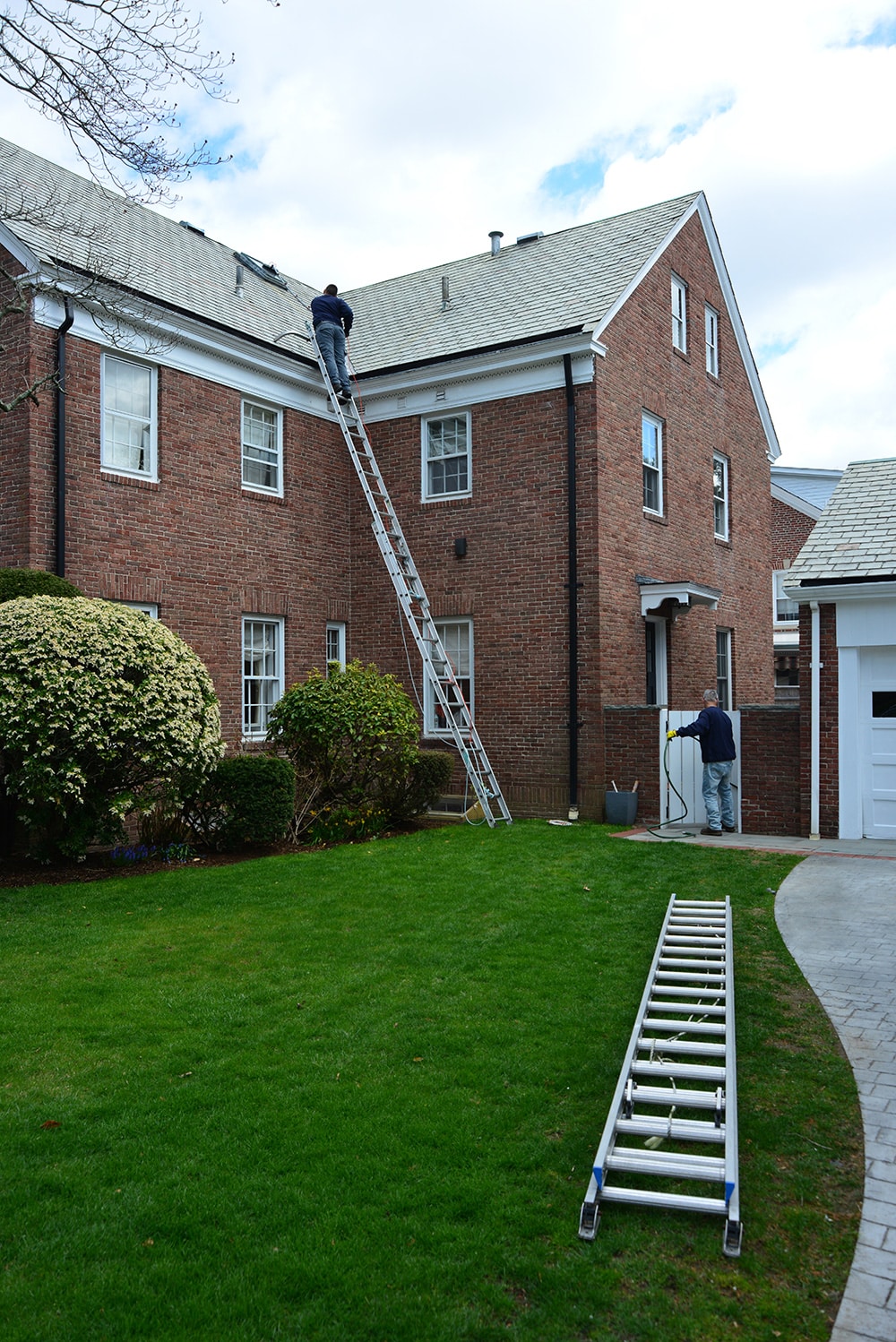
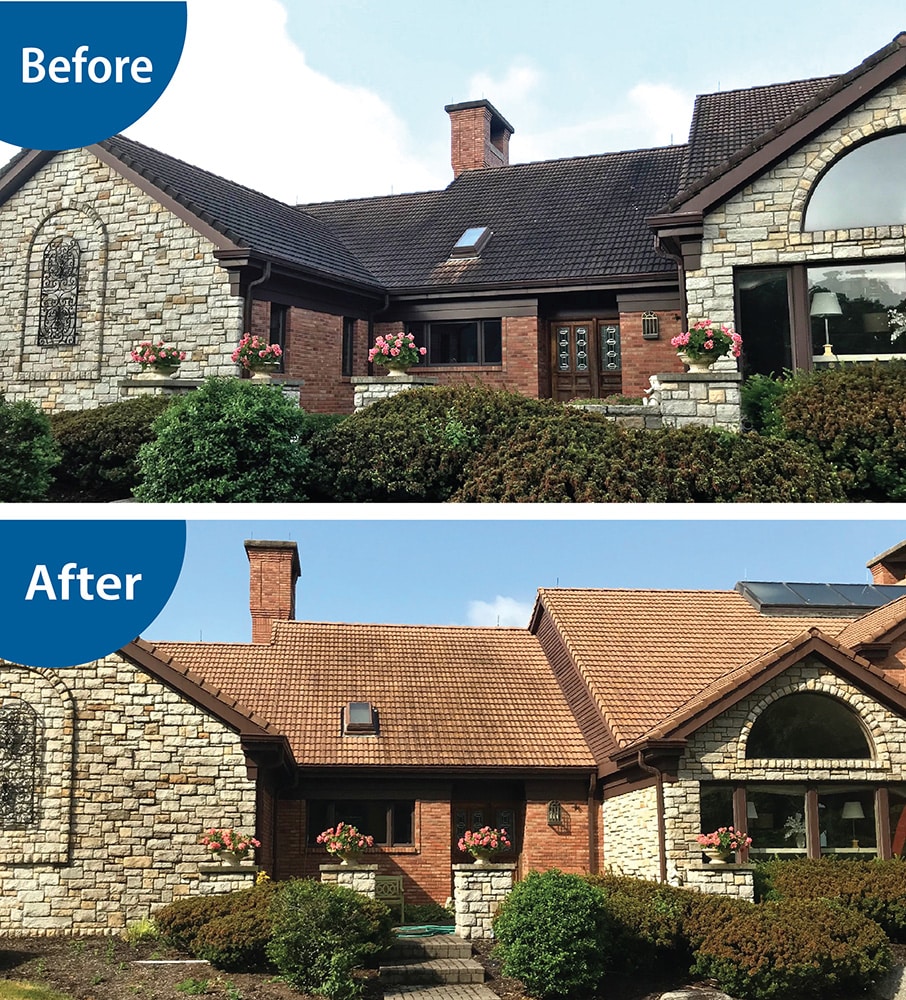
Clearly Amazing soft washes roofs across Tigard from an office on SW 74th Avenue, in the south of the city. We do not pressure wash roofs — on asphalt shingle that strips the granules that protect it, and in a climate like this one the damage shows up as faster regrowth, not just a shorter roof life.
Call (503) 255-2532 for a free on-site estimate.
Why Tigard roofs grow moss
Oregon State University’s Extension Service publishes standing guidance on controlling roof moss. That is not a coincidence of academic interest — it is because the western Willamette Valley produces close to ideal conditions for it, and homeowners here deal with it at a scale that most of the country does not.
The mechanism is straightforward. Moss needs sustained moisture, shade, and something organic to establish in. NOAA’s 1991–2020 normals for Portland International Airport put over 80% of the year’s rain in October through April, with December the wettest month at 5.77 inches. That is roughly seven months of consistent damp under the low winter sun angle, and on a north-facing slope under Douglas-fir the surface may not properly dry in that entire window.
Then July arrives with about half an inch of rain for the month. The moss goes brown and crisp and looks dead from the ground. It is not. The rhizoids — the root-like structures that grip the shingle surface — survive the dry summer and green back up with the October rain. This is why homeowners who scrape the visible growth off in August are surprised to see it back by Christmas.
Get a free estimate in Tigard
What moss actually does to a Tigard roof
Unlike the black streaking common in the humid Southeast, which the roofing industry generally treats as a discoloration issue, moss is structural. It holds water against the shingle rather than letting it shed. Established growth works under the shingle edges and lifts them, which is how water reaches the decking underneath.
The Asphalt Roofing Manufacturers Association is worth quoting accurately here, because a lot of contractors do not. ARMA warns explicitly against ever pressure washing an asphalt shingle roof. And it states plainly that only trained professionals should be doing this work.
ARMA is equally honest about the limits, and so are we: the effect of any roof cleaning is temporary, and growth is likely to recur. This is maintenance on an interval, not a permanent fix.
Which Tigard roofs need it soonest
Not every roof in the city carries the same pressure. The ones that need attention soonest tend to share these traits.
- North-facing slopes. Lower sun angle, slower drying, and in a seven-month wet season that difference compounds.
- Mature conifer cover overhead. Douglas-fir and Western red cedar are both established in Tigard’s urban forest. They shade the roof year-round, unlike deciduous trees that at least let winter light through, and they drop needles that hold moisture on the surface.
- Roofs near the creek corridors. The tree-heavy lots along Fanno Creek and toward the Tualatin River carry both more shade and more organic debris.
- Older roofs that have never been treated. Once growth is well established, the surface has been holding moisture for years already.
The hillside neighborhoods around Bull Mountain are a mixed picture. Higher elevation and more exposure can mean better drying on the south and west aspects, while the tree cover on the sheltered slopes gives you the opposite.
How we work
Free on-site estimate in Tigard
Clear the runoff path. Killed moss ends up in the gutters. We clear what comes down so the system is not blocked heading into the wet season.
Areas we cover in Tigard
The whole city and the surrounding Washington County area — Bull Mountain, River Terrace, Metzger, Summerfield, the Tigard Triangle, and the neighborhoods around Washington Square. Our office is on SW 74th Avenue, so this is our home ground rather than an outlying service area.
When to schedule
Late spring through summer is the right window in Tigard. The roof is dry enough to work safely, the growth is still present to treat, and you go into October with a clean surface rather than seven months of accumulated growth.
In a climate like this one, roof cleaning belongs on the maintenance calendar alongside the gutters and the furnace filter — not on a list of things you deal with once it looks bad. Most Tigard homeowners keep theirs on a regular cycle of every couple of years, more often under heavy conifer shade, which keeps growth from ever getting established. If you can already see green from the street, it has had a good while to take hold, and that is worth getting on top of.
Questions Tigard customers ask
Will this damage my shingles?
Not at the pressure we use. The damage risk in roof cleaning comes from high pressure and from abrasion, which is why ARMA warns against both power washers and stiff brushes on asphalt. Low-pressure chemical treatment is the method their own guidance describes.
How long before it comes back?
This is maintenance rather than a one-time repair — ARMA is clear that the effect of any roof cleaning is temporary and that growth returns. In this climate most homes do well on a cycle of every couple of years, which is what keeps it from re-establishing rather than letting it build back up. Trimming branches to get more light onto the roof stretches that interval further than anything else you can control.
Can I just do it myself?
On a low-pitch, walkable, dry roof, careful chemical application from a ladder is within reach. Two things to weigh. Wet moss is extremely slippery, and the U.S. Consumer Product Safety Commission estimates more than 164,000 emergency-room-treated ladder injuries a year. And runoff management on a planted Tigard lot is most of the work.
What about zinc strips?
The mechanism is real — metal ions in the runoff inhibit growth below them. But ARMA specifically advises against retrofitting strips to an existing roof, because installing them means either exposed nails or breaking the shingle sealant bond, and both are leak paths. ARMA’s position is that strips make sense at roof replacement. If someone offers to add them to your existing roof, that is the trade-off you are accepting.
My roof is old. Is cleaning still worth it?
Sometimes not. If there is widespread granule loss, curling, or missing shingles, the money is better spent on a roofer’s assessment. We will tell you that at the estimate rather than after.
Clearly Amazing — Portland / Tigard
15717 SW 74th Avenue, Suite 400, Tigard, OR 97224